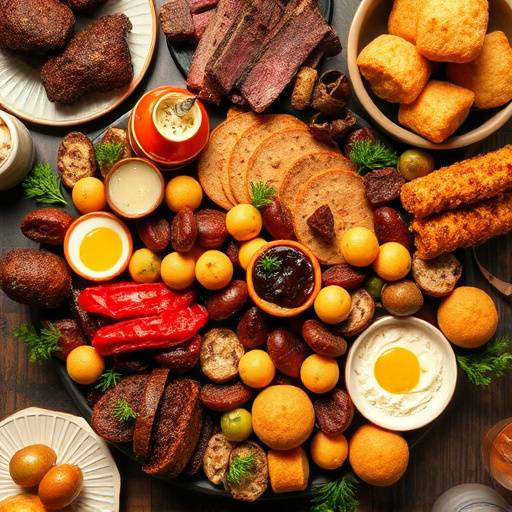
A Culinary Journey Through South Africa
Welcome to Flavors of Azania, your guide to the captivating world of South African cuisine. This land of stunning landscapes and diverse cultures has a culinary heritage as rich and varied as its people. From the indigenous flavors of the Khoisan to the influences of European settlers and Asian immigrants, South African food tells a story of resilience, adaptation, and vibrant fusion.
A Tapestry of Flavors: The History of South African Cuisine
The story of South African cuisine is a reflection of its complex history. Before the arrival of European settlers, the indigenous Khoisan people thrived on a diet of foraged plants, hunted game, and seafood along the coasts. The arrival of the Dutch East India Company in the 17th century brought new ingredients like spices, wheat, and livestock, which gradually blended with local ingredients. The subsequent arrival of French Huguenots and British settlers further shaped the culinary landscape.
The enslavement of people from Southeast Asia, particularly from Indonesia and Malaysia, brought the distinctive Cape Malay influence to the Western Cape. Dishes like bobotie, bredie, and sosaties are testaments to this cultural exchange, blending fragrant spices with local ingredients. The indentured laborers from India who arrived in the 19th century to work in the sugar cane fields of KwaZulu-Natal contributed another layer of flavor, introducing curries, samosas, and other Indian specialties to the South African palate.
The apartheid era, while a dark chapter in South African history, paradoxically fostered a unique culinary unity in some areas. Limited access to certain foods and shared experiences led to the development of dishes that transcended racial lines, reflecting a common South African identity. Post-apartheid, South African cuisine has continued to evolve, embracing its diverse heritage and pushing the boundaries of culinary innovation.
"South African cuisine is not just about the food; it's about the stories, the memories, and the connections that are made around the table." - Zola Nene, Renowned South African Chef
Melting Pot of Cultures: Key Influences on South African Food
- Indigenous Cuisine: Rooted in the traditions of the Khoisan and Bantu-speaking peoples, emphasizing wild plants, game meats, and traditional cooking methods like grilling and smoking.
- Dutch Influence: Brought staples like wheat, dairy products, and meat-based dishes, influencing everything from bredies (stews) to rusks (dried biscuits).
- Cape Malay Influence: A vibrant fusion of Southeast Asian spices and cooking techniques, resulting in iconic dishes like bobotie, bredie and koeksisters.
- Indian Influence: Introduced fragrant curries, samosas, and bunny chow (a hollowed-out loaf of bread filled with curry), particularly prevalent in KwaZulu-Natal.
- British Influence: Contributed dishes like fish and chips, roast dinners, and afternoon tea, elements that became interwoven with South African culinary traditions.
These different cultural strands have intertwined to create a cuisine that is both familiar and unique, reflecting the complex history of South Africa itself.
Flavors Across the Land: Regional Variations in South African Cuisine
South African cuisine is not monolithic; each region boasts its own unique specialties and culinary traditions:
- Western Cape: Known for its Cape Malay cuisine, seafood dishes, and fine wines. Bobotie, bredie, snoek (a local fish), and koeksisters are prominent dishes.
- KwaZulu-Natal: Famous for its Indian-influenced cuisine, particularly curries and bunny chow. Also known for its fresh seafood and spicy flavors.
- Gauteng: A melting pot of flavors, reflecting the diversity of its population. Home to township cuisine, including shisa nyama (grilled meat) and pap (maize porridge).
- Eastern Cape: Known for its traditional Xhosa cuisine, which often features samp (dried maize kernels), beans, and slow-cooked stews.
- Northern Cape: Influenced by its arid environment, with dishes featuring dried meats, game, and hearty stews.
Exploring these regional variations offers a deeper understanding of the breadth and depth of South African cuisine. Each region's unique ingredients, cooking methods, and cultural influences contribute to the overall richness of the South African culinary tapestry.
| Region | Signature Dishes | Key Influences |
|---|---|---|
| Western Cape | Bobotie, Snoek, Koeksisters, Bredies | Cape Malay, Dutch, Seafood |
| KwaZulu-Natal | Bunny Chow, Durban Curry, Seafood Curry | Indian, Zulu, Seafood |
| Gauteng | Shisa Nyama, Pap en Vleis, Mogodu | Diverse, Township Culture |
| Eastern Cape | Umngqusho (Samp and Beans), Potjiekos, Traditional Stews | Xhosa, Rural Traditions |
Embrace the Flavors of Azania
South African cuisine is a testament to the power of food to connect people, preserve traditions, and celebrate diversity. We invite you to explore the recipes, stories, and flavors that make South African food so unique and captivating. From the fiery spices of Durban curry to the sweet indulgence of koeksisters, there is something for everyone to discover and enjoy. Join us on this culinary adventure and experience the true Flavors of Azania.